
Why Sealed and Conditioned Crawlspaces Outperform Traditional Foundation Vents
Macedonia, United States – June 15, 2026 / EZ Breathe /
Out of sight should never mean out of mind. The dark, hidden crawlspace beneath your home plays a massive role in the structural integrity of your entire property.
The Old Building Code Myth: Why Passive Crawlspace Vents Fail
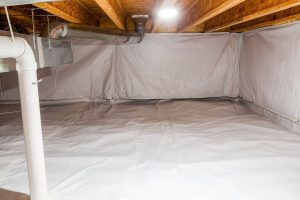 For decades, traditional residential building codes required homes with crawlspaces to feature passive plastic or metal vents cut into the foundation walls. The conventional architectural wisdom was simple: allow outdoor air to flow freely through one side of the foundation and out the other to keep the subfloor dry.
However, real-world building science has thoroughly debunked this old approach. While passive venting works reasonably well in arid climates, it creates an environmental disaster in regions with high seasonal humidity. The problem lies entirely in the laws of thermodynamics.
When hot, humid summer air enters a cool crawlspace through open vents, it undergoes a rapid temperature drop. Because cool air cannot hold as much moisture as warm air, this incoming air mass quickly reaches its dew point. The result? The invisible moisture transforms into liquid water, condensing directly onto your cold metal plumbing pipes, concrete foundation walls, and wooden floor joists. Passive vents don’t dry your crawlspace out in the summer—they accidentally invite gallons of raw water inside.
Structural Consequences of High Crawlspace Vapor Pressure
When moisture continuously condenses on your subfloor structures, the relative humidity in the crawlspace easily passes the 70% threshold. This is the exact baseline required for mold spores and wood-decaying fungi to wake up and begin feeding.
As wood-rot fungi feast on the organic cellulose fibers of your home’s structural framing, the wooden floor joists soften and lose their load-bearing capacity. Homeowners upstairs will begin to notice the early structural warning signs: sagging or unlevel subfloors, gaps opening between the floorboards and baseboards, and bouncy or squeaking spots in high-traffic hallways.
Worse yet, this damp, rotting wood releases a distinct organic scent that acts as an open invitation for destructive subterranean pests. Termites, wood-boring beetles, and rodents thrive in dark, wet, unventilated spaces, compounding the structural damage and leading to incredibly expensive structural remediation bills.
Understanding True Crawlspace Conditioning
To break this destructive cycle, modern home performance specialists utilize a process known as crawlspace conditioning. Rather than leaving the space vulnerable to the whims of outdoor weather, conditioning treats the crawlspace as a controlled, semi-conditioned zone of the house envelope.
True conditioning goes beyond simply laying a plastic moisture barrier on the dirt floor (often referred to as encapsulation). While a heavy-duty vapor barrier is crucial to stop ground moisture from rising out of the soil, sealing a crawlspace completely without addressing the trapped air mass introduces a new set of problems. Without active air turnover, stale air, wood odors, and toxic soil gases like radon remain locked beneath your living space. True conditioning requires an engineered, continuous mechanical solution to keep the air moving.
Why Negative Pressure Air Exchange Wins Over Sealed Dehumidification
 When it comes to managing air quality in a conditioned crawlspace, homeowners usually choose between two main systems: heavy-duty commercial dehumidifiers or active mechanical air-exchange ventilation. While both manage moisture, mechanical air exchange offers superior long-term performance and value.
Dedicated low-wattage mechanical ventilation units operate by continuously expelling stagnant, contaminated air from the lowest point of the crawlspace directly out of the house entirely. By pushing this old air out, the system establishes a controlled zone of gentle negative pressure. This pressure imbalance forces cleaner, drier, conditioned air down from your upper living floors past the subfloor gaps, permanently changing the direction of air migration.
This active exchange provides two major benefits over a standard dehumidifier. First, it actively flushes out harmful soil gases, off-gassing chemical toxins, and stale odors rather than merely drying out the same dirty air mass. Second, while a high-capacity dehumidifier draws between 400 and 700 watts of power—causing a significant spike in your monthly utility bills—an active mechanical ventilation unit runs continuously on roughly 40 watts (similar to a standard lightbulb). It delivers a permanently dry subfloor for mere pennies a day.
Frequently Asked Questions About Crawlspace Management
Should I open or close my crawlspace vents during the hot summer months?
You should close them completely. Opening your vents during humid summer weather allows warm, moisture-laden outdoor air into your cool crawlspace, where it condenses into liquid water on your wooden framing and pipes, accelerating mold growth and wood rot. How do I know if moisture in my crawlspace is affecting my main living space?
Look for clear indicators on your first floor, such as cupping or warping hardwood floorboards, unexplained spikes in your upstairs indoor humidity, musty odors rising from floor HVAC registers, or family members experiencing worsening allergy and asthma symptoms at home. What is the most energy-efficient way to keep a crawlspace dry?
Active, low-wattage mechanical air ventilation is the most efficient choice. Unlike high-amperage dehumidifiers that constantly run expensive, energy-guzzling cooling compressor loops, a dedicated air-exchange system uses very little energy to continuously pull pre-conditioned, dry air down from the main living spaces.
Protect Your Home’s Foundation Today
Don’t let hidden crawlspace moisture compromise your family’s health and your home’s equity. Contact our crawlspace environmental specialists today to schedule an inspection and discover how our maintenance-free air exchange systems can safeguard your subfloor for good.


Contact Information:
EZ Breathe
349 Highland Rd
Macedonia, OH 44056
United States
Erika Lacroix
(866) 822-7328
https://ezbreathe.com/


