Your Voicemail Greeting Is Your Second Chance to Make a First Impression
Newark, United States – February 25, 2026 / Phone.com /
A well-crafted business voicemail system turns missed calls into opportunities rather than lost revenue.
-
The average small business loses over $6,000 annually due to poorly managed missed calls, yet strategic voicemail setup can recover a significant portion of these leads.
-
Modern voicemail features like transcription, email forwarding, and customized greetings keep you connected even when you can’t answer.
-
Customer expectations for response time have accelerated, making every voicemail touchpoint critical for retention.
Investing fifteen minutes in voicemail optimization can dramatically improve how callers perceive your business.
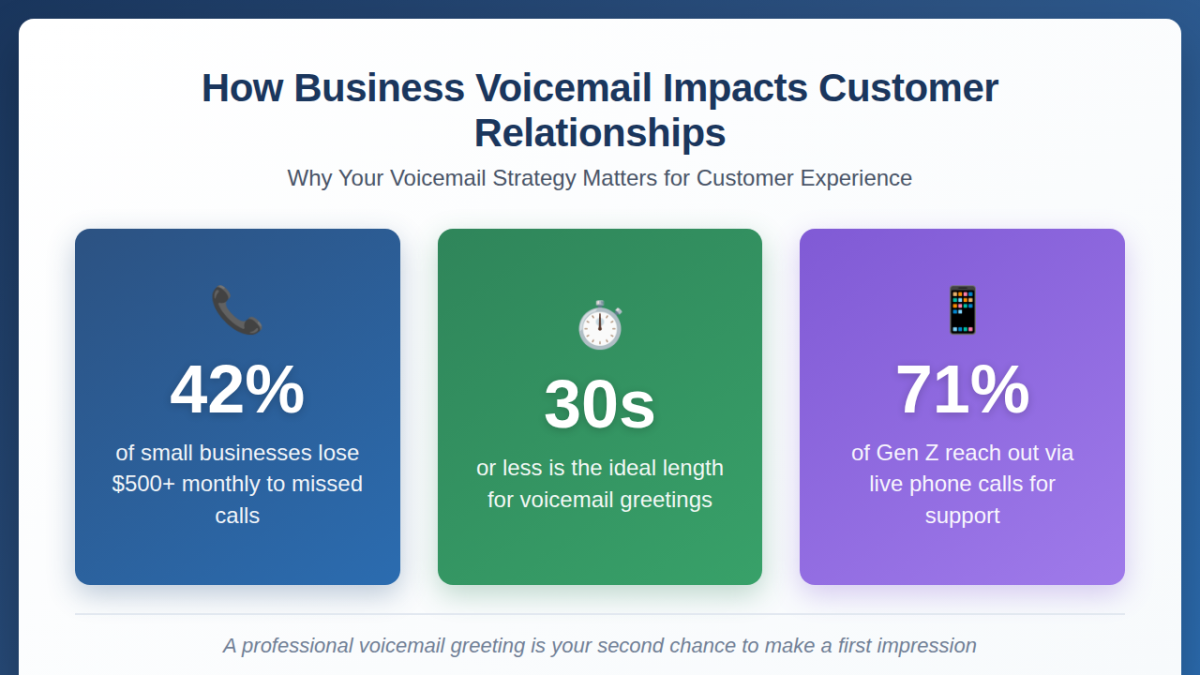
When a customer calls your business and reaches voicemail, that moment represents more than an unanswered phone. It’s a decision point where callers either feel valued enough to leave a message or frustrated enough to call your competitor instead. According to recent findings from Entrepreneur magazine, 42% of small and medium businesses estimate losing at least $500 every month to missed calls alone.
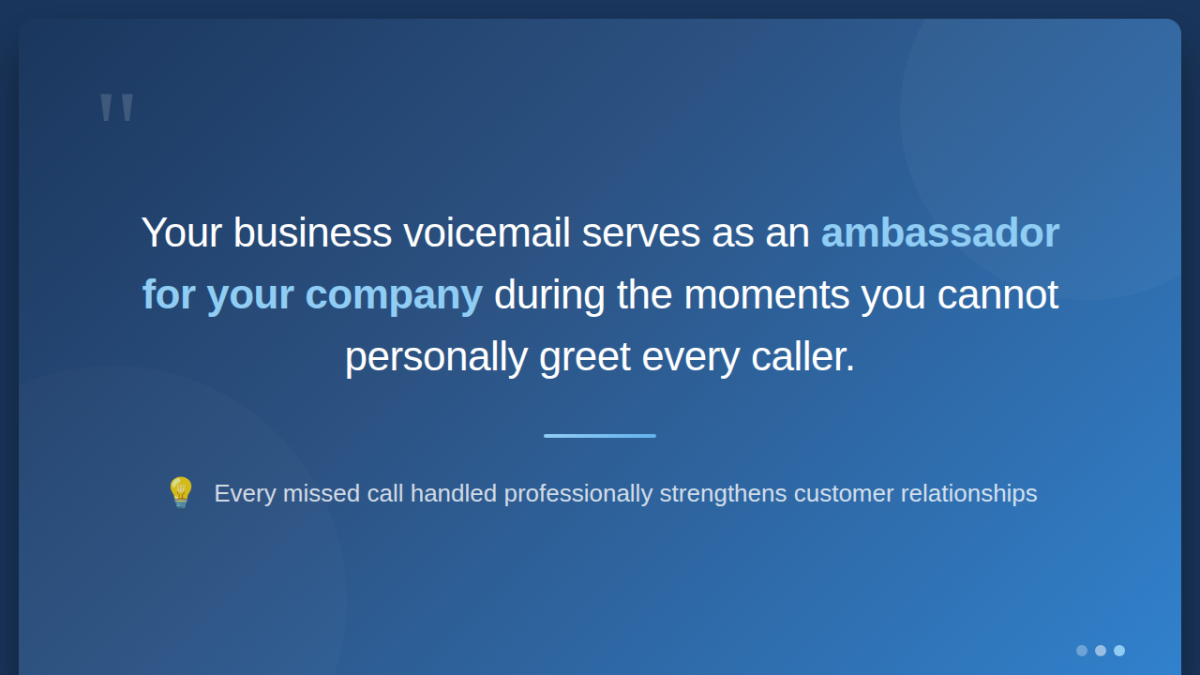
Your business voicemail serves as an ambassador for your company during the moments you can’t personally greet every caller. For small business owners juggling multiple responsibilities, strategic voicemail and call management creates the professional image that keeps customer relationships intact. Getting this right requires thoughtful planning and the right approach.
Why Does Business Voicemail Still Matter for Customer Experience?
The assumption that voicemail has become obsolete ignores a truth about customer behavior. When someone picks up the phone to call a business, they have typically reached a critical moment in their decision-making process. They want answers, they want them quickly, and they are evaluating whether your company can deliver.
Callers who reach voicemail form immediate impressions about your business. A generic or outdated greeting signals disorganization. A professional, warm message conveys competence and care. The difference between these two experiences often determines whether you earn a callback, a message, or complete silence followed by a Google search for your competitor.
Phone calls remain important across all demographics. Even 71% of Gen Z consumers now reach out to customer support via live phone calls, defying assumptions that younger generations avoid voice communication entirely. The personal nature of phone conversations builds trust faster than text-based alternatives, particularly for service-based businesses where relationships drive revenue.
Your business voicemail also creates opportunities that email and text can’t replicate. Callers often reveal more information in a voice message than they would type. They share context, urgency levels, and emotional cues that help you prioritize responses and personalize follow-up conversations. Treating voicemail as a strategic asset rather than a necessary inconvenience transforms how customers experience your brand.
What Are the Essential Elements of an Effective Voicemail Setup?
Creating a voicemail system that serves both your business and your customers requires attention to several components. Each element builds upon the others to create a seamless experience for callers.
Clear Business Identification
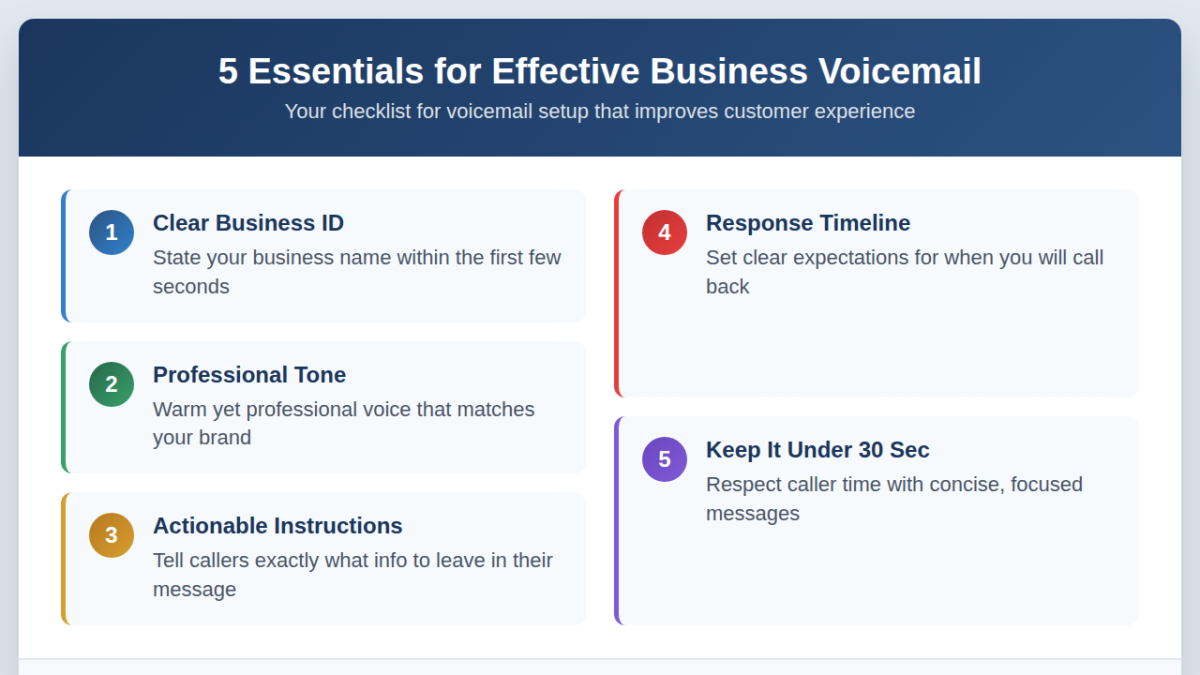
Your greeting should immediately confirm that callers have reached the right place. State your business name clearly within the first few seconds. This simple step prevents the frustration callers feel when they are unsure whether their call connected correctly. For businesses with multiple departments or team members, consider whether individual voicemail boxes or a centralized system better serves your callers.
Including your name or department adds a human element that generic greetings lack. Callers respond better when they know a specific person will receive their message rather than feeling like they are speaking into a void.
Professional Yet Personable Tone
The voice and energy of your greeting communicate volumes about your business culture. Aim for warm professionalism rather than stiff formality or excessive casualness. Your tone should match your brand identity and the expectations of your typical customer base.
Recording quality matters more than most business owners realize. Background noise, muffled audio, or poor pacing undermine even well-written scripts. Take time to record in a quiet environment, speak clearly, and listen back critically before making your greeting live.
Actionable Instructions
Every effective voicemail greeting guides callers toward a specific next step. Tell them exactly what information you need: name, phone number, reason for calling, and best time to reach them. Callers who leave complete messages enable faster, more effective follow-up.
Consider offering alternatives for urgent matters. Providing an email address, website URL, or emergency contact number gives callers options when voicemail does not fit their immediate needs. This approach respects their time while ensuring you capture the opportunity to serve them.
Reasonable Time Expectations
Letting callers know when they can expect a return call manages expectations and reduces frustration. If you typically return calls within two business hours, say so. If same-day callbacks are unrealistic for your operation, honest communication builds more trust than overpromising.
Modern business phone systems with voicemail-to-email features make it easier to respond promptly regardless of your location. When you can check messages from anywhere, you can often call back faster than traditional desk-bound systems allow.
What Are Tips for Optimizing Your Business Voicemail System?
Transforming your voicemail from adequate to excellent requires ongoing attention and adjustments. These practical recommendations address the most impactful areas for improvement.
-
Keep greetings under 30 seconds. Callers quickly lose patience with lengthy recordings. Deliver essential information efficiently and let them speak.
-
Update greetings seasonally and for special circumstances. Holiday closures, extended absences, or temporary changes deserve specific messages rather than leaving callers confused.
-
Create department-specific voicemail boxes. Routing sales inquiries to one box and support questions to another streamlines response and demonstrates organizational competence.
-
Enable voicemail transcription. Reading messages quickly helps you prioritize urgent matters and prepare informed callbacks without replaying audio repeatedly.
-
Test your system monthly. Call your own number from an outside line to hear exactly what customers experience. Technical issues often go unnoticed until someone checks.
-
Track voicemail metrics. Note how many messages you receive, response times, and callback success rates. Data reveals patterns that intuition misses.
-
Train team members on consistent practices. When multiple people handle voicemail, establishing standards ensures customers receive uniform experiences.
These improvements compound over time. Small refinements to your voicemail setup create measurable differences in customer satisfaction and operational efficiency.
What Are Common Business Voicemail Mistakes That Hurt Customer Experience?
Recognizing problematic patterns helps you avoid the pitfalls that frustrate callers and damage your reputation. Many of these mistakes stem from good intentions poorly executed.
Outdated or Generic Greetings
Nothing signals neglect faster than a voicemail greeting referencing last year’s holiday hours or using the default system message. Customers notice when businesses fail to maintain basic communication touchpoints. Schedule quarterly reviews of all recorded greetings to ensure accuracy.
Generic greetings that provide no business identification force callers to wonder whether they dialed correctly. Even simple personalization distinguishes your business from competitors who can’t be bothered with the basics.
Overly Long Messages
The urge to share extensive information about your business, hours, website, social media, and promotional offers creates recordings that test caller patience. Your voicemail greeting is not a marketing brochure. Respect the caller’s time and save detailed information for actual conversations.
Most callers make snap decisions about whether to leave a message within the first ten seconds. Front-load the most important information and keep the total length under thirty seconds.
Missing or Unclear Callbacks
Promising to return calls “as soon as possible” means nothing without actual follow-through. If your business struggles with return call consistency, address the underlying operational issue rather than making promises you can’t keep.
When callbacks happen, reference the voicemail specifically. Saying “I received your message about the service quote and wanted to follow up” demonstrates attentiveness that builds trust.
Ignoring After-Hours Needs
Business doesn’t always happen during convenient hours. Callers reaching your voicemail at 8 PM deserve the same professional experience as those calling at 10 AM. Consider whether AI-powered answering solutions or after-hours routing might better serve customers outside regular business hours.
For industries where emergencies occur, providing clear guidance about urgent versus routine matters helps callers self-select appropriate response channels.
How Do Modern Business Communication Tools Transform Voicemail?
Technology has expanded what business voicemail can accomplish. Understanding available features helps you leverage voicemail as part of a comprehensive communication strategy.
Voicemail-to-Email Integration
Receiving voicemails as email attachments or transcribed text enables faster response from anywhere with internet access. You no longer need to dial in to a clunky voicemail system to hear messages. This feature proves valuable for business owners and team members who work remotely or travel frequently.
Transcription services convert spoken messages into readable text, making it easy to scan multiple messages quickly and prioritize responses. While transcription technology occasionally makes errors, the time savings typically outweigh minor inaccuracies.
Visual Voicemail Management
Modern business phone applications display voicemails as a scannable list rather than requiring sequential playback. You can see who called, when they called, and how long their message runs before deciding which to address first. This capability transforms voicemail management from a time-consuming chore into an efficient workflow.
Automated Responses and Routing
Intelligent call handling can direct callers to voicemail, live receptionist services, or AI-powered assistants based on time of day, caller identification, or other criteria. This flexibility ensures callers receive appropriate experiences regardless of when they reach out.
Automated text responses acknowledging missed calls can bridge the gap between voicemail and callback. A simple “Thanks for calling! We received your message and will respond shortly” reassures callers that their message did not disappear into a void.
Integration With Business Systems
Advanced business communication platforms connect voicemail to customer relationship management software, scheduling tools, and team collaboration platforms. These integrations create seamless workflows where voicemail messages automatically trigger appropriate follow-up actions.
Frequently Asked Questions
How often should I update my business voicemail greeting? Review and update your greeting at least every quarter, plus whenever business circumstances change. Holiday closures, vacation periods, staffing changes, and special promotions all warrant temporary greeting modifications. Stale greetings make your business appear inattentive to details.
What information should callers include in their voicemail messages? Request their name, phone number (stated slowly and clearly), the reason for their call, and the best time to reach them. For specific industries, additional information like account numbers, appointment dates, or order numbers speeds up resolution. Keep your requested information list short enough that callers can remember it without replaying your greeting.
Is voicemail still relevant when most people prefer texting? Phone calls and voicemail remain highly relevant for business communication, particularly for complex matters, urgent needs, and situations requiring detailed explanation. Many customers prefer the personal nature of voice communication when making important decisions. Offering multiple contact channels, including voicemail, ensures you serve all customer preferences.
How quickly should I return voicemail messages? Industry standards and customer expectations vary, but same-business-day responses are a reasonable baseline for most situations. For time-sensitive industries like healthcare, legal services, or home repair, faster turnaround often proves necessary. Track your actual response times and set realistic expectations in your greeting rather than overpromising.
Create a Voicemail Experience That Reflects Your Business Values
Your business voicemail is one of many touchpoints where customers form opinions about whether you deserve their trust and money. Every missed call handled professionally strengthens relationships, while every frustrating voicemail experience gives competitors an opening.
The strategies outlined here require modest time investments that yield substantial returns through improved customer satisfaction, recovered leads, and enhanced professional reputation. Start with an honest assessment of your current voicemail experience, identify the gaps, and implement improvements.
Phone.com provides the modern business communication tools that make professional voicemail management accessible and affordable.


Contact Information:
Phone.com
625 Broad Street
Newark, NJ 07102
United States
Amber Newman
https://www.phone.com/


