Strength Training for Osteoporosis: How Exercise Builds Bone Density in Older Adults
Santa Rosa, United States – April 20, 2026 / Studio Fitness /
Santa Rosa, CA – April 01, 2026 – New evidence confirms that structured resistance exercise can increase bone mineral density in adults over 60, offering a practical intervention for osteoporosis management and fracture prevention. Studio Fitness Santa Rosa now provides specialized strength training for seniors designed to rebuild bone strength through controlled, progressive resistance work that stimulates bone cells to adapt and strengthen while reducing fall risk.
Bone density naturally declines after age 30, with the Centers for Disease Control and Prevention reporting that approximately 12.6% of adults aged 50 and over have osteoporosis, climbing to 17.7% among those 65 and older. Women face significantly higher rates, with nearly 20% of women over 50 affected compared to just over 4% of men. Without intervention, bones become porous and prone to fractures from minor impacts or falls.
Resistance Training Triggers Measurable Bone Density Increases
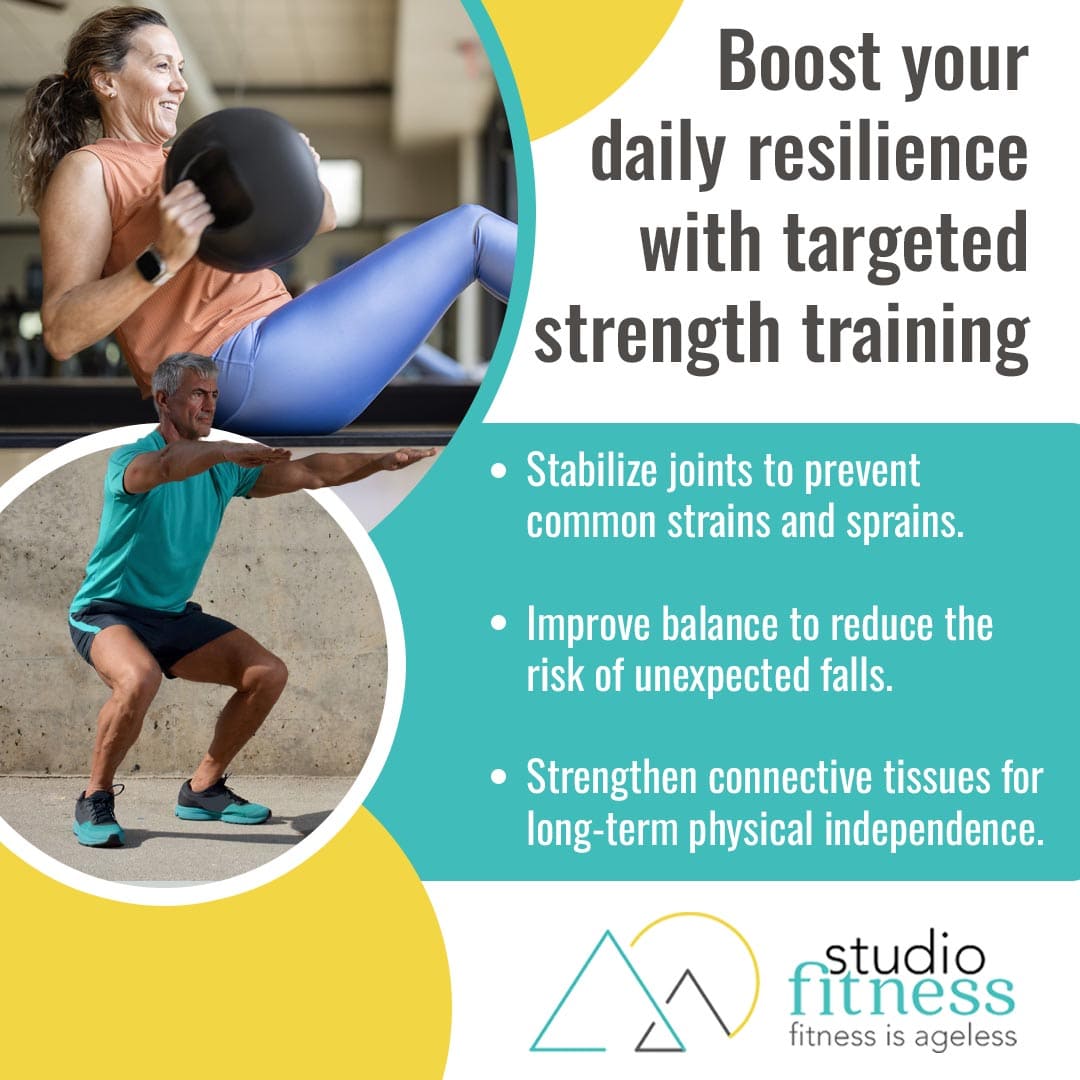
Bones constantly remodel through breakdown and rebuilding processes. When muscles pull against bones during resistance exercise, bones respond by depositing more mineral content. This mechanical stress signals bone cells to lay down new tissue, gradually increasing density over time.
Bone Density Changes Over 12 Months
|
Location |
Resistance Training |
No Training |
|
Total hip |
+0.64% average |
-0.5 to -1.5% |
|
Lumbar spine |
+0.62% average |
-0.5 to -1.5% |
|
Femoral neck |
+0.22% average |
-0.5 to -1.5% |
Research demonstrates that high-velocity resistance training performed twice weekly produces improvements ranging from 0.9% to 5.4% at the lumbar spine, total hip, and femoral neck. Benefits may be lost if training stops for more than six months, emphasizing the importance of consistent programming.
Safe Workouts for Seniors Address Osteoporosis-Specific Concerns
Effective workouts for seniors focused on bone health differ significantly from general fitness programs. Safe programming avoids high-risk movements while maintaining bone-loading benefits:
Movements to Avoid:
-
Forward spinal bending (flexion) that increases the risk of a compression fracture
-
Twisting movements, creating shear forces on the vertebrae
-
High-impact exercises like jumping
-
Rapid, ballistic movements, reducing control
Safe Alternatives Include:
-
Hip hinges with neutral spine alignment
-
Planks or standing core work
-
Step-ups or resistance band exercises
-
Multi-joint exercises loading major bone areas
A personal trainer for seniors experienced in osteoporosis management assesses individual limitations before designing programs. This includes reviewing bone density test results, understanding fracture history, and identifying movement restrictions. Training progresses gradually, starting with bodyweight or light resistance and advancing only when form remains perfect.
Strength Training Reduces Fall Risk and Fracture Severity
Strong bones provide limited protection if falls occur frequently. The relationship between muscle strength, balance, and fall prevention creates protective effects extending beyond bone density alone. More than 14 million older adults fall each year in the United States, with falls causing the leading injury-related deaths in this age group.
Fall Impact Statistics for Adults 65+
|
Measure |
Rate/Percentage |
|
Annual fall rate |
1 in 4 adults |
|
Falls requiring medical care |
37% of all falls |
|
Emergency department visits |
3 million annually |
|
Fall-related deaths (2024) |
78.4 per 100,000 |
Resistance training addresses fall risk through improved muscle power, better proprioception, enhanced core stability, and increased movement confidence. According to the International Osteoporosis Foundation, hip fractures lead to loss of independence in approximately 40% of cases, with mortality rates reaching 20-24% in the first year following injury. Building strength through consistent training restores confidence while maintaining both muscle and bone health.
How Senior Fitness Programs Ensure Safe Bone-Building Results
Not all fitness gyms for seniors understand the specific needs of older adults managing bone density concerns. Professional guidance matters because the line between challenging bones enough to stimulate growth and overloading them to the point of injury can be narrow.
Red flags when evaluating programs include generic group classes without individual modifications, instructors lacking senior fitness certifications, high-intensity interval training without adaptations, and a lack of assessment before starting. Effective programs begin with movement assessments, provide small group settings or one-on-one options, and advance at an individual’s pace rather than predetermined schedules.
Studio Fitness takes a methodical approach to senior strength training, particularly for clients managing bone density concerns. Sessions begin with thorough assessments, progress through carefully structured phases, and incorporate regular check-ins to adjust intensity as bone strength improves.
Timeline for Bone Density Improvements
Beginning a senior fitness program with bone density concerns requires patience and clear planning. The timeline for bone density improvements measures in months, not weeks, but benefits to strength, balance, and confidence appear much sooner:
-
Weeks 4-6: Noticeable muscle strength increases
-
Weeks 8-12: Balance and coordination improvements are evident
-
Months 12-18: Bone density increases measurable on DEXA scans
-
Immediate: Fracture risk reduction begins as strength and balance improve
Start Building Stronger Bones with Strength Training for Seniors
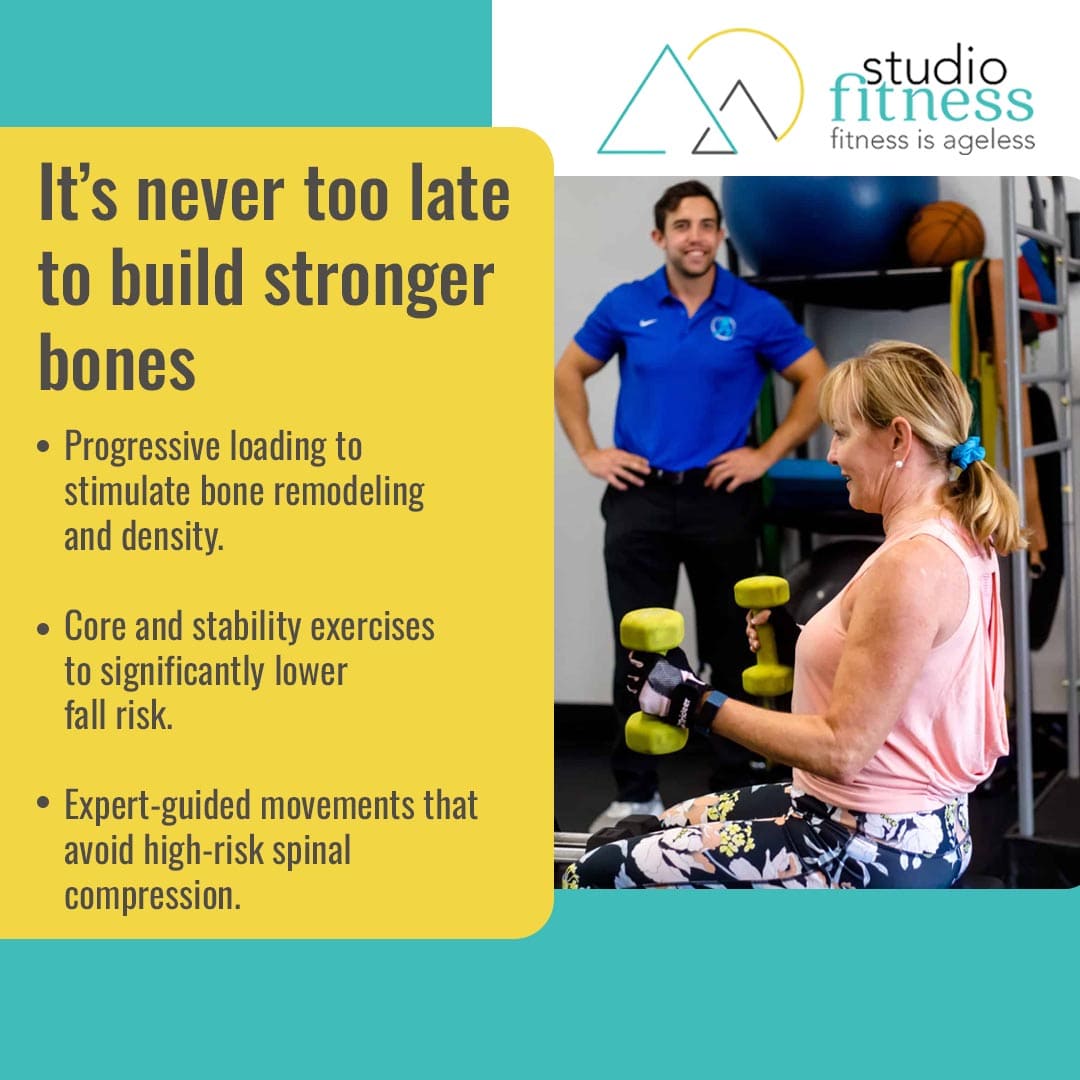
Adults in Santa Rosa and Sonoma County managing bone density concerns can access specialized exercise classes for seniors at Studio Fitness. Certified trainers create personalized programs matching current capabilities while progressing at an individual pace. The calm, supportive environment allows focus on proper form without crowded facility distractions. Schedule a gym tour and fitness evaluation by calling (707) 235-6426 or emailing shelly@studiofitnesssantarosa.com.
About Studio Fitness in Santa Rosa
Studio Fitness is a private training studio in Santa Rosa that provides personalized fitness programs, including personal training, senior fitness, mobility work, balance training, and nutrition support. With a focus on safe, individualized coaching, the studio helps clients improve strength, movement, and overall physical function in a supportive setting.


Contact Information:
Studio Fitness
2700 Yulupa Avenue #15
Santa Rosa, CA 95405
United States
Shelly Fitzsimmons
(707) 235-6426
https://www.studiofitnesssantarosa.com/
Original Source: https://www.studiofitnesssantarosa.com/strength-training-for-osteoporosis-how-exercise-builds-bone-density-in-older-adults/


